Building a custom home gives you something you simply don’t get when buying an existing house: the opportunity to design the home around the way you actually live.
Before you start picking out countertops, flooring, or paint colors, one of the most important decisions you’ll make is the floor plan. The right layout can make your home feel comfortable, functional, and easy to live in for years to come.
There’s no one-size-fits-all floor plan. What works for one family may not work for another. Let’s break down some of the things you should think about when designing a custom home floor plan.
Start With How You Live
The best floor plans start with your lifestyle – not a trend.
Think about how you use your home every day.
Do you spend most of your time in the kitchen? Do you work from home? Do you entertain often? Do you have young children? Do you need a first-floor bedroom? How much storage do you really need?
These are the questions that should drive your design.
A floor plan might look great on paper, but if it doesn’t work for your daily routine, you’ll notice it quickly once you move in.
Think About the Flow of the Home
One of the biggest things I tell people to consider is how they’re going to move through the house.
You don’t want to walk through the entire house just to get from the garage to the kitchen. You don’t want your laundry room on the opposite side of the house from the bedrooms if that doesn’t make sense for your family.
Think about the everyday stuff:
- Bringing groceries in from the garage
- Getting kids ready for school
- Coming home with muddy shoes
- Doing laundry
- Entertaining family and friends
- Moving between the kitchen, dining room, and living room
- Good design makes those things easier.
Open Concept vs. Defined Spaces
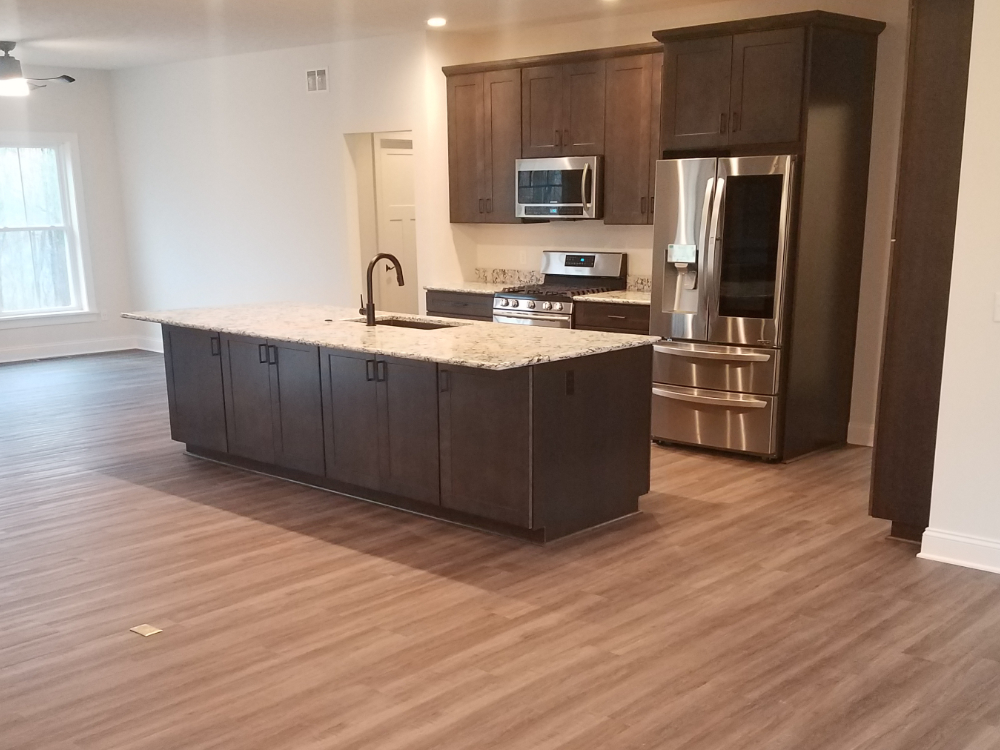
Open-concept homes continue to be popular, and for good reason. An open kitchen, dining, and living area can make a home feel larger and gives everyone a place to gather.
But open doesn’t have to mean everything is connected.
There are times when having a little separation makes more sense. A home office, bedroom, playroom, or quiet sitting area may benefit from being away from the main living space.
The goal isn’t to build the most open house possible. It’s to build a home that works for you.
Make the Most of Natural Light
Where you put your windows matters.
Natural light can completely change how a room feels, and your floor plan should take advantage of the lot, the views, and the way the sun moves throughout the day.
Think about where you want your main living spaces to face. Maybe you have a great backyard view you want to enjoy from the kitchen or living room. Maybe you want morning sunlight in the bedroom.
These are things that are much easier to get right during the design process than after the house is built.
Plan for Storage Early
Storage is one of those things that people don’t always think about until they don’t have enough of it.
Don’t just think about bedroom closets. Think about the pantry, mudroom, linen closets, kitchen cabinets, garage storage, and places to keep the everyday things that tend to pile up.
A well-designed home isn’t necessarily the home with the most square footage. It’s the home that uses the space it has wisely.
Think About the Future
You’re not just designing a house for today.
Maybe your family will grow. Maybe you’ll eventually have kids moving out. Maybe you’ll work from home more. Maybe you’ll want a first-floor bedroom and bathroom later in life.
It’s worth thinking about how the home can adapt.
A bonus room might become a bedroom or office. A flex space could serve as a playroom today and something completely different five or ten years from now.
Planning ahead can save you from making major changes later.
Don’t Design Rooms in Isolation
Every room matters, but the relationship between those rooms matters just as much.
The kitchen should work with the dining and living areas. The mudroom should make sense with the garage. Bedrooms should have the privacy you want. Bathrooms should be convenient without taking space away from areas where you’ll spend more time.
It’s all connected.
That’s one of the biggest advantages of building custom. You aren’t trying to make your life fit into someone else’s floor plan. You’re creating the floor plan around your life.
Consider the Lot
Your home shouldn’t be designed without considering where it’s going to sit.
The size and shape of your lot, driveway, trees, views, grade, sun exposure, and surrounding properties can all affect the design.
A good floor plan works with the property instead of fighting it.
Maybe the lot has a beautiful view that deserves to be highlighted. Maybe the slope gives you an opportunity for a walkout basement. Maybe the backyard is where your family will spend most of its time.
Those details should be part of the conversation from the beginning.
Think About Furniture Before You Build
This is an easy one to overlook.
When you’re looking at a floor plan, don’t just look at the walls. Think about where your furniture is actually going to go.
Where will the couch sit? Will your dining table fit comfortably? Is there enough room around the kitchen island? Can you open doors and move through the room without everything feeling crowded?
It’s much easier to solve those problems on paper than after the drywall is up.
Create a Home That Feels Like Yours
Ultimately, designing a custom home floor plan isn’t about following every current design trend. It’s about creating a home that reflects your priorities, routines, personality, and vision for the future.
At Holding Homes, the goal is to help turn that vision into a thoughtfully designed home where every space has a purpose. With careful planning and the right design approach, your custom floor plan can become more than a collection of rooms—it can become the foundation for the way you want to live.
Ready to start designing your dream home? Explore your ideas, define your priorities, and work with an experienced home-building team to create a floor plan tailored specifically to you.